How to Build a Social Media Content Plan
A strong social media content plan gives a small business a repeatable way to decide what to post, why it matters, and when it should go live. Instead of creating content reactively, you build a simple structure that connects your business goals to a realistic publishing rhythm.
The best content plans are not complicated. They are specific enough to guide your week, flexible enough to handle timely opportunities, and practical enough for your team to maintain.
What is a social media content plan?
A social media content plan is the working blueprint for your social content. It usually defines your goals, audience, content themes, posting cadence, channel priorities, campaign timing, and the process used to move ideas from draft to published post.
A content plan is different from a content calendar. The plan explains what you are trying to accomplish and what kinds of content you will create. The calendar assigns that content to specific dates and times.
Start with one or two clear business goals
Before deciding what to post, decide what you want social media to help you accomplish. Small businesses often try to do too much at once, which leads to inconsistent messaging.
Choose one or two primary goals for the next 30 to 90 days, such as:
- increase awareness in your local market,
- educate potential customers about a service,
- generate inquiries or website visits,
- support an upcoming promotion or event,
- build trust through useful expertise, or
- stay visible with existing customers.
Your goal should influence the content mix. A business focused on trust may publish more educational and behind-the-scenes content. A business promoting a seasonal service may need more campaign-oriented posts and reminders.
Define the audience you are actually speaking to
“Everyone” is not a useful audience. Even a broad local business benefits from identifying the people most likely to need its product or service.
Think about:
- who typically buys from you,
- what questions they ask before buying,
- what problems they are trying to solve,
- what would make them trust your business, and
- what information could move them closer to taking action.
This gives your content a clearer purpose and makes AI-assisted drafting more effective because you can provide better context.
Choose your content pillars
Content pillars are recurring topic areas that help you stay consistent without repeating the same post. Most small businesses only need three to five.
A practical mix might include:
Educational content
Teach something useful, answer common questions, explain a process, or clarify a misconception.
Trust-building content
Share behind-the-scenes details, team expertise, customer experiences, processes, or what makes your business different.
Product or service content
Explain what you offer, who it is for, and the problems it solves.
Engagement content
Ask relevant questions, share quick tips, or invite customers to participate in the conversation.
Promotional content
Highlight offers, events, deadlines, launches, or seasonal opportunities.
The goal is not to give every pillar an equal number of posts. Use them as a framework so your content stays balanced and connected to your business.
Pick a realistic posting cadence
Consistency matters more than creating a schedule your team cannot sustain. A small business that can reliably publish three useful posts per week is usually better positioned than one that attempts daily posting and stops after two weeks.
Start by asking:
- How much content can we realistically review and approve?
- Do we have enough useful topics to maintain this pace?
- Which channels matter most to our audience?
- Can we batch content instead of creating it every day?
Your posting cadence can change over time. The initial goal is to create a system your business can actually maintain.
Build a simple monthly framework
Once your pillars and cadence are clear, create a rough monthly structure.
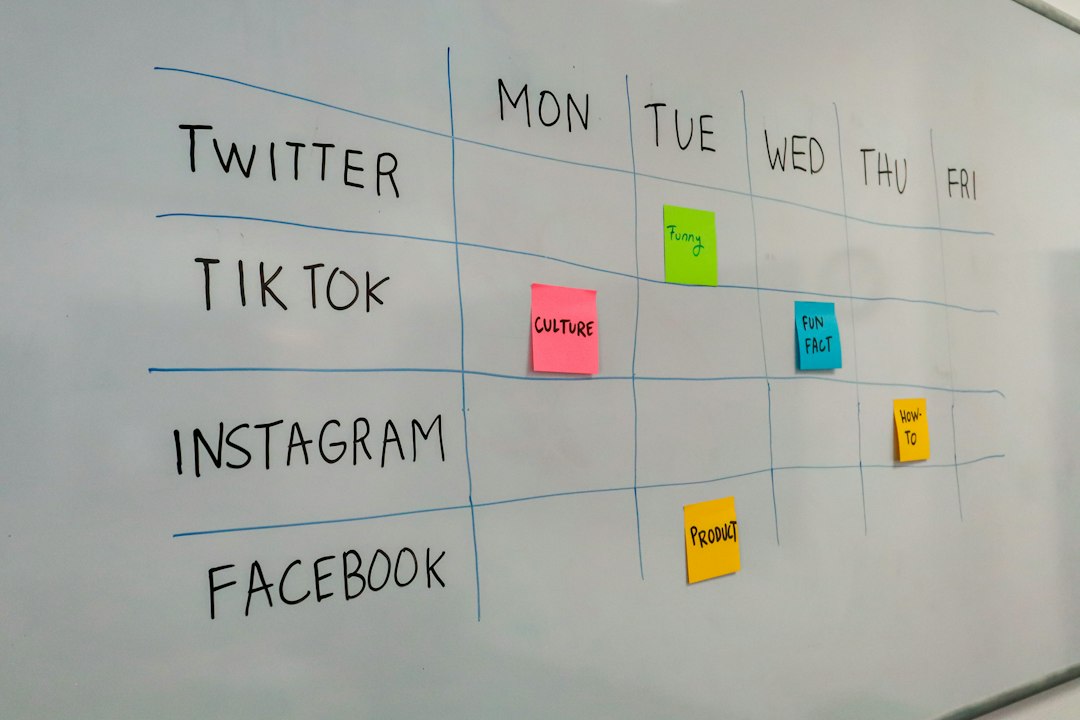
For a business posting three times per week, one week might look like this:
- Monday: educational tip or customer question,
- Wednesday: service, product, or behind-the-scenes post,
- Friday: engagement, promotion, testimonial, or seasonal topic.
The exact days are less important than having a repeatable system. Your calendar can then adapt around real promotions, holidays, events, and time-sensitive updates.
Create content in batches
Batching reduces the amount of context-switching involved in social media. Instead of writing one post every morning, set aside one focused session to create several posts at once.
A simple batch workflow:
- Choose the next two to four weeks of topics.
- Draft captions or outlines.
- Create or select visuals.
- Review the content for accuracy and tone.
- Place approved posts into the calendar.
- Schedule what can be scheduled in advance.
AI can help speed up the first-draft stage, but your business should still review the content before it goes live. For a practical starting point, read our guide to AI social media content creation for small businesses.
Plan for each channel without duplicating everything
Multichannel publishing does not mean every platform needs completely different content. Start with one core idea and adjust the presentation where necessary.
For example, a single educational topic could become:
- a concise caption with a graphic,
- a longer educational post,
- a short vertical video concept,
- a checklist-style post, or
- a visual carousel or series.
This keeps your message consistent while giving each channel a format that fits how people use it.
Leave room for timely content
Do not fill every calendar slot weeks in advance. Keep some flexibility for:
- business announcements,
- customer questions that come up repeatedly,
- local or seasonal opportunities,
- events,
- new products or services, and
- content inspired by current customer conversations.
A good plan provides structure without making your content feel rigid.
Use a review process before publishing
Even a small business benefits from a simple approval checklist. Before scheduling a post, confirm:
- the facts are accurate,
- the tone sounds like your brand,
- the visual matches the message,
- links and dates are correct,
- the call to action makes sense, and
- the post supports one of your current goals.
This is especially important when AI is involved in drafting content.
Measure what is helping
A content plan should improve based on actual results. You do not need to track every available metric. Focus on the signals connected to your goals.
Depending on the objective, that might include:
- engagement,
- website clicks,
- inquiries,
- video views,
- reach, or
- which topics consistently outperform others.
Use that information to adjust your next month of content. If educational posts repeatedly perform well, create more of them. If a format takes significant time and produces little value, reconsider how often you use it.
How Postrillo can support the planning process
Postrillo combines AI-assisted caption and post generation with a content calendar, scheduling, multichannel publishing, and analytics and reporting. That allows the planning process to continue into creation, scheduling, publishing, and measurement without rebuilding the workflow in separate places.
You can use AI to develop first drafts, organize approved content in the calendar, schedule posts for future publication, publish across supported channels, and use reporting to guide what you create next.
A simple content plan you can use today
If you need a starting point, use this five-part structure:
- Goal: choose one primary marketing objective.
- Audience: define who the content is for.
- Pillars: choose three to five recurring topic areas.
- Cadence: select a posting rhythm you can maintain.
- Review: look at performance monthly and adjust.
That is enough to create a useful, sustainable social media plan without turning content management into a full-time project.
Related resources
Social Media Scheduling for Small Businesses: Complete Guide
Learn how small businesses can schedule social media content efficiently, stay consistent, manage multiple channels, and keep room…
Read resource
AI Social Media Content Creation: A Practical Guide for Small Businesses
Learn how small businesses can use AI to create social media content faster while protecting brand voice, accuracy,…
Read resourcePut what you learned into action.
Create, plan, schedule, publish, and measure your social media content with Postrillo.
Explore Postrillo